
Email List Building for Beginners: The Complete System to Own Your Audience
Most online income opportunities fail not because the idea is bad, but because the builder never owned their audience. You were one algorithm update away from losing everything—a social media account suspended, a traffic source dried up, a platform changing its rules. But when you build an email list, you build the one asset that survives every change in the game.
Email list building for beginners doesn’t require fancy funnels, expensive tools, or years of marketing experience. It requires three things: clarity on what you’re offering, a simple system to capture emails, and consistency in showing up. This guide walks you through each step, from setting up your first list to landing your first 1,000 subscribers—and why that matters more than you think.
Why Email List Building Matters for Your Online Income
Let’s be direct: email list building for beginners is foundational because email is the only marketing channel you truly control. When you post on social media, the algorithm decides who sees it. When you buy ads, you’re renting access to an audience. But when someone subscribes to your email list, they’re giving you permission to reach them directly—no algorithm tax, no middleman.
The numbers back this up:
- Email ROI: The average return is $36 for every $1 spent on email marketing.
- Engagement: Email has a 45% average open rate across industries (when done right), far outpacing social media reach.
- Ownership: Your list is an asset you can leverage for affiliate offers, your own products, services, partnerships—anything you build.
For someone starting an online business—whether you’re promoting affiliate products, launching an info product, building a coaching practice, or scaling eCommerce—your email list is the engine. It’s the difference between chasing viral moments and building a predictable income stream.
The Three Pillars of Email List Building for Beginners
Before you open an email service provider or write your first opt-in page, understand the core structure. Every email list is built on three pillars:
1. An Offer (Your Lead Magnet)
Your lead magnet is the incentive that makes someone give you their email address. It’s not your entire course or your 200-page guide—it’s the first taste that solves a specific problem or teaches one valuable thing. Examples:
- A 5-day email course teaching one skill
- A PDF checklist solving a pain point
- A template or swipe file
- A short video or recorded training
- A discount code or exclusive offer
The best lead magnets solve a problem in less than 10 minutes to consume. If your lead magnet takes an hour to go through, people won’t sign up—they’ll bounce.
2. A Capture Mechanism (Your Opt-In Page)
This is where you ask for the email. It can be a dedicated landing page, a pop-up on your site, an inline form in a blog post, or a link in your social media bio. The mechanism doesn’t matter—clarity and trust do. New email list builders often make two mistakes here:
- Asking for too much data. Beginners request first name, last name, phone, company, industry, and shoe size. Stop. Just ask for email. If you want first name, that’s acceptable. Everything else is friction.
- Burying the offer. Make it crystal clear what someone gets the moment they land on the page or see the form.
3. An Email Service Provider (Your List Platform)
This is where your subscribers live and where you send emails from. Popular beginner-friendly options include Mailchimp (free up to 500 subscribers), ConvertKit, ActiveCampaign, or Brevo. The choice matters less than picking one and starting—you can migrate later.
Step-by-Step: Setting Up Your First Email List
Here’s the practical walkthrough for email list building for beginners from zero to launch.
Step 1: Choose Your Email Service Provider
Start with Mailchimp (free) or Brevo if you’re bootstrapping. Both let you set up automation, segment your list, and send professional emails without paying. As you grow past a few hundred subscribers, you’ll likely upgrade to a more feature-rich platform. Don’t overthink this—the best platform is the one you’ll actually use.
Step 2: Create Your First Lead Magnet
Pick one small, specific problem your audience has and solve it. If you’re in fitness, it’s not a 200-page nutrition guide—it’s a “7-Day Meal Prep Template for Busy People.” If you’re in affiliate marketing, it’s not everything you know—it’s a “Swipe File of 10 Affiliate Niches with Zero Competition” or a “Checklist: 5 Things to Check Before Promoting an Affiliate Product.”
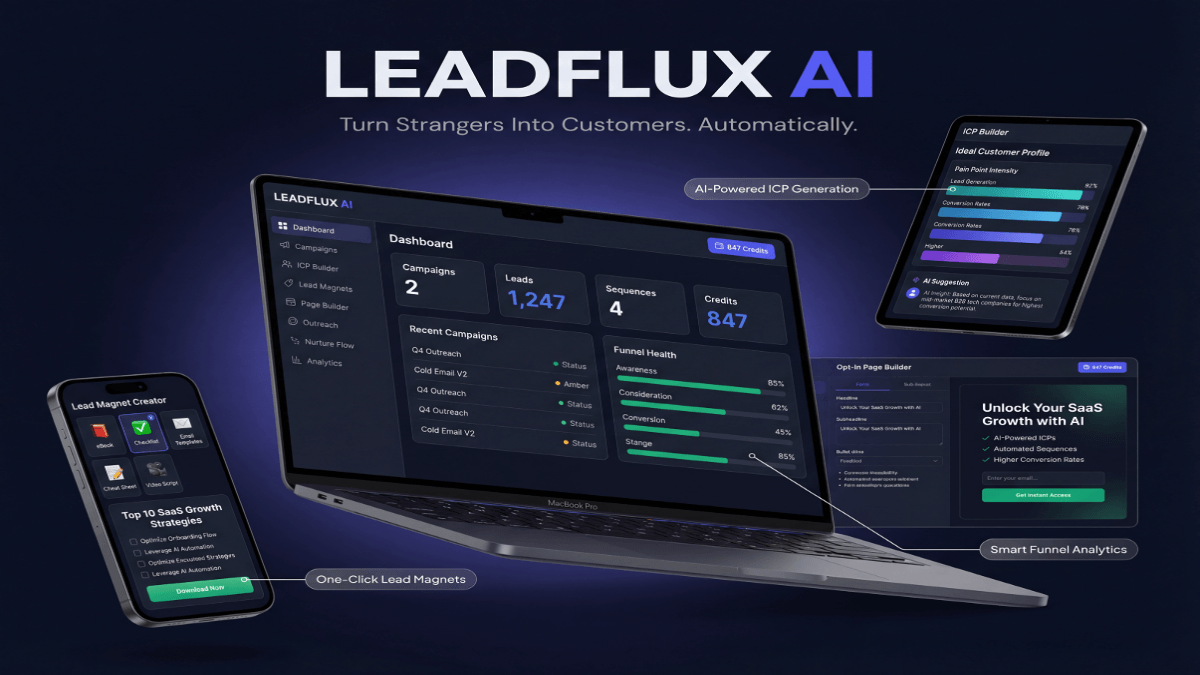
Stop Guessing. Start Converting.
LeadFlux AI Does the Heavy Lifting.
Tracking KPIs is only half the battle — you need a system that turns data into revenue. LeadFlux AI automatically identifies your highest-value prospects, scores leads in real time, and delivers conversion-ready pipelines so you can focus on closing deals, not chasing dead ends.
See How LeadFlux AI WorksCreate it in Google Docs, Canva, or any tool you’re comfortable with. Convert to PDF. Done. You don’t need design polish or a 50-page manual. A simple, useful one-pager converts better than a 200-page guide no one has time to read.
Step 3: Build Your Opt-In Page
For beginners, use a simple landing page builder like Carrd, LeadPages, or unbounce. Or use your email provider’s built-in landing page feature. Here’s the bare-minimum structure:
- Headline: “Get [Your Lead Magnet] + Join [X] Subscribers” (specific and benefit-driven)
- One image or brief video: Shows the lead magnet or demonstrates the benefit
- 3-4 bullet points: What they’ll get or learn
- Email form: Name (optional) + email only
- CTA button: “Send Me [Lead Magnet]” (specific, not generic “Submit”)
That’s it. Fancy pages don’t convert better than clear pages. Test your copy, not your design.
Step 4: Set Up Automation
When someone subscribes, they should automatically receive your lead magnet within seconds. Set up a welcome email sequence:
- Email 1 (immediate): “Welcome! Here’s your [Lead Magnet] + link to download.”
- Email 2 (1 day later): “Here’s how to get the most out of [Lead Magnet]…”
- Email 3 (3 days later): Introduce yourself, share your story, why you built this, what’s next.
These early emails are your chance to build trust. Don’t pitch yet. Provide value, be genuine.
Step 5: Drive Traffic to Your Opt-In Page
You have your funnel. Now where do you send people? Starting options:
- Social media: Share the link in your bios, in posts, in communities where your audience hangs out.
- Blog posts: Embed opt-in forms within relevant content or link to your landing page.
- Forums & communities: Participate genuinely, mention your resource when relevant (not spammy).
- Collaborations: Partner with other beginners to cross-promote lists.
- Content upgrades: Offer a PDF download inside a blog post in exchange for email.
Common Mistakes That Kill Email List Growth
Email list building for beginners trips up most often on these avoidable mistakes:
Mistake 1: Offering Something No One Wants
Your lead magnet must solve a real problem your audience acknowledges they have. Don’t assume—ask your audience on social media or in communities: “What’s your biggest frustration with [topic]?” Use that feedback to build your offer.
Mistake 2: Asking for Too Much Information
Each additional field reduces conversion by 25-50%. Stick with email only, or email + first name if you want personalization. Everything else is overhead that kills your growth.
Mistake 3: Disappearing After the Welcome Sequence
Beginners build a list, then don’t email for weeks. Your subscribers forget they signed up. Email frequency matters: aim for 1-2 emails per week, minimum. Quality content, not spam. Consistency builds the relationship.
Mistake 4: Only Pitching, Never Teaching
Your list isn’t a sales channel yet—it’s a trust channel. Spend 80% of your emails teaching, entertaining, or helping. 20% can be promotional. The ratio builds credibility and keeps unsubscribes low.
Mistake 5: Ignoring Unsubscribes and Bounces
If people unsubscribe, that’s data. Read the feedback. If they don’t open your emails, pause and ask why before sending more. A list is only valuable if it’s engaged.
Tools That Make Email List Building Easier
You don’t need many tools, but these help streamline email list building for beginners:
| Tool | Purpose | Cost | Best For |
|---|---|---|---|
| Mailchimp | Email sending + list management | Free (up to 500 contacts) | Beginners, bootstrapped |
| Brevo | Email + automation + SMS | Free (up to 300 emails/day) | Multi-channel campaigns |
| Carrd | One-page landing pages | $19/year | Simple opt-in pages |
| Canva | Design lead magnets | Free or $13/mo | Non-designers |
| Google Forms | Simple opt-in forms | Free | Embedded forms, quizzes |
| ConvertKit | Creator-focused email | $29+/mo | Content creators, courses |
Real Numbers: What to Expect
Here’s the reality for email list building for beginners. These are healthy benchmarks, not guarantees:
- Opt-in conversion rate: 2-5% of visitors who land on your page. A 10-person daily visitors = 0-1 signup per day.
- Time to 100 subscribers: 2-6 months if you’re driving traffic consistently (1-2 hours per day on outreach, content, or sharing).
- Time to 1,000 subscribers: 6-12 months using organic methods (content, community, collaborations).
- Open rate: 20-30% for engaged lists (industry average is much lower, but beginners with smaller, intentional audiences do better).
- Monetization: Expect to make $0-5 per 100 subscribers per month in the first year, scaling as you prove your email’s value to partners and offers.
These timelines aren’t exciting, but they’re real. Success in email list building comes from consistency, not hacks.
Frequently Asked Questions About Email List Building for Beginners
Q: Should I use a free email provider or pay for one?
Start free. Mailchimp, Brevo, and Convertkit’s free tiers are enough for your first 500-1,000 subscribers. Once you’ve proven the concept and are generating revenue, upgrade. Don’t pay for features you don’t yet use.
After manually qualifying hundreds of leads each week, I switched to LeadFlux AI's lead scoring system and immediately saw my sales team’s efficiency double within the first month.
Q: How do I grow my email list without paid ads?
Five organic tactics for email list building for beginners: (1) Create blog content and offer downloadables, (2) Share your opt-in link in relevant Facebook/Reddit/Discord communities, (3) Collaborate with other creators to cross-promote, (4) Guest post on popular blogs and mention your list, (5) Use social media to drive curiosity and direct to your landing page. Consistency beats shortcuts.
Q: What should I name my email list?
Make it clear what subscribers are getting into. Instead of “Updates,” use “Daily Marketing Tips” or “Weekly Freelance Income Strategies.” Specificity attracts the right people and repels those who aren’t interested—which is good for engagement.
Q: How often should I email my list?
Start with once per week and monitor open rates and unsubscribes. If open rates stay healthy (above 20%), increase to 2-3 times per week. If they drop, pull back. Your audience will tell you the right frequency if you listen to the data.
Q: Can I sell to my list immediately?
Not effectively. Spend 3-6 months building trust through free value first. Then, when you promote an affiliate offer, your own product, or a partnership, your audience is warm and receptive. Email list building for beginners that skips the trust phase gets ignored or unsubscribed from quickly.
The Path Forward: Building the System You Own
Email list building for beginners isn’t complex. It’s not about having the fanciest funnel or the most sophisticated automation. It’s about consistently offering value to a group of people who’ve chosen to hear from you. That simple act—building a repeatable list—changes the economics of every other online income stream you touch.
The affiliate marketer with a 5,000-person list makes money more reliably than the one hunting for traffic every week. The eCommerce founder who owns customer emails survives algorithm changes that kill the paid-ad players. The coach or service provider with a growing email list has a sales pipeline that compounds.
Start today. Build one lead magnet. Set up one opt-in page. Drive traffic from the channels where your audience already is. Email them consistently. Watch it grow. In 6-12 months, you’ll have an asset that produces income and opportunity you can leverage across whatever money-making model you’re building. That’s the real power of email list building for beginners—it’s not a tactic, it’s the foundation.